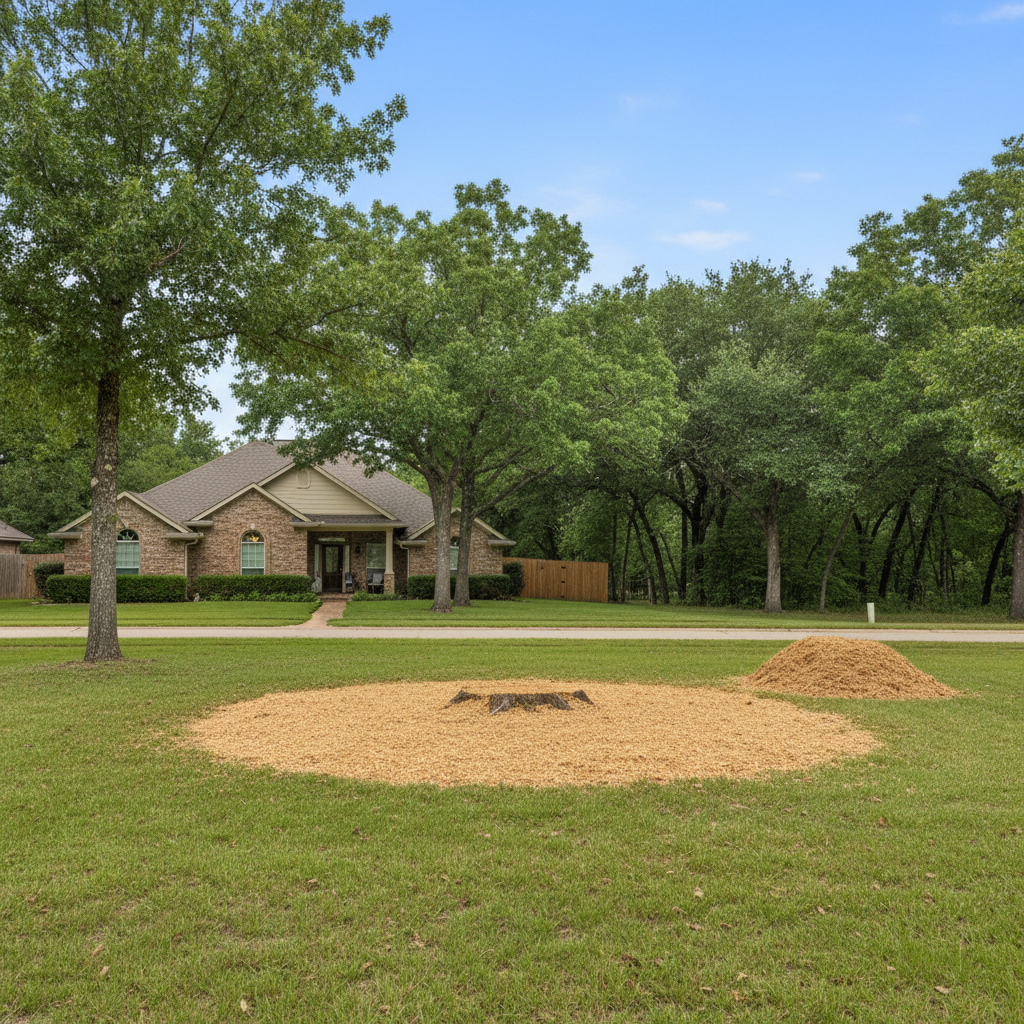
So, you finally got rid of that old, ugly tree stump. Good for you! Whether you had it ground down or completely removed, you've taken a big step towards improving your yard. But the job isn't entirely done when the crew packs up, is it? There's a little bit of maintenance involved to make sure that spot stays clear and doesn't cause you problems down the road. I've seen plenty of folks think it's 'set it and forget it,' and that's usually when issues pop up.
Making Your Stump Removal Last
When we grind a stump, we usually go down 6-12 inches below the ground level, sometimes more depending on what you're planning for the area. This leaves a pit filled with wood chips and soil. The biggest thing you can do to make that work 'last' – meaning, keeping the spot clear and ready for whatever's next – is proper backfilling and grading. You don't want a sunken spot that collects water, especially after our Luling downpours. That standing water can lead to all sorts of issues, from attracting mosquitoes to creating a muddy mess that's hard to mow.
First, let the wood chips settle for a bit. They'll break down over time, which is good, but it also means the ground will sink. After a week or two, or after a good rain, you'll definitely notice it. Then, you need to fill that hole with good, clean topsoil. Don't just dump a bunch of rocks in there. You want soil that will compact well and support new grass or plants. Grade it slightly higher than the surrounding ground, because it will settle. Overfill it by an inch or two, and let nature do its thing. If you're putting in a new flower bed or planting a small tree, make sure you're adding plenty of fresh, nutrient-rich soil to give those new plantings a fighting chance.
Regular Upkeep: What to Look For
Even after you've backfilled, you'll want to keep an eye on the area. The main thing you're looking for is any sign of regrowth. Sometimes, especially with certain species like hackberry or mesquite that are common around here, a few stubborn roots might try to sprout. These are usually pretty weak and easy to deal with if you catch them early.
If you see a small sprout, just pull it out by hand. If it's a bit bigger, you might need a trowel or a shovel to get the root out. The goal is to stop it from establishing itself. You're also watching for further settling. If the ground sinks again, just add more topsoil. It's a bit like topping off your car's fluids – a little bit here and there keeps things running smooth.
Another thing to consider is drainage. If the area where the stump was removed starts holding water, you might need to adjust the grading slightly. This is particularly important in areas with our heavy clay soils, like what you find in some of the older neighborhoods west of Highway 183. Water doesn't drain quickly, so you want to encourage it to move away from your house and other structures.
Warning Signs of Trouble
There are a few red flags that tell you something isn't quite right. The most obvious is significant regrowth. If you're seeing multiple, strong shoots coming up from the old stump site, or if the sprouts you pull keep coming back with a vengeance, that's a sign the root system might still be more active than you want. This usually happens if the grind wasn't deep enough, or if some large lateral roots were missed.
Another warning sign is persistent fungal growth. While some fungi are natural decomposers, if you're seeing large mushrooms or shelf fungi consistently popping up right where the stump was – especially if they're woody or tough – it could mean there's still a good amount of decaying wood underground. This isn't necessarily a disaster, but it can indicate a slower decomposition process and might attract pests.
Finally, if the ground keeps sinking significantly, creating a hazard or a deep depression that collects water, that's a problem. It means the remaining wood chips are breaking down faster than expected, or the backfill wasn't done properly.
When to Call a Professional
Most of the maintenance I've talked about, you can handle yourself. But there are times when it's better to pick up the phone. If you're seeing aggressive regrowth that you can't control, or if you're worried about the structural integrity of the ground after a deep grind, don't hesitate to call Paradise Tree. We've got the equipment and the know-how to assess the situation properly.
If you're planning on building something over the old stump site – like a new patio, a shed, or even a foundation for an addition – you absolutely need to make sure all significant wood is gone. A professional can ensure the area is properly prepared to prevent future settling or structural issues. It's always better to overdo it a little at the start than to deal with costly repairs later. We're here to help you keep your property safe and looking good, so if you're ever in doubt, just give us a shout.