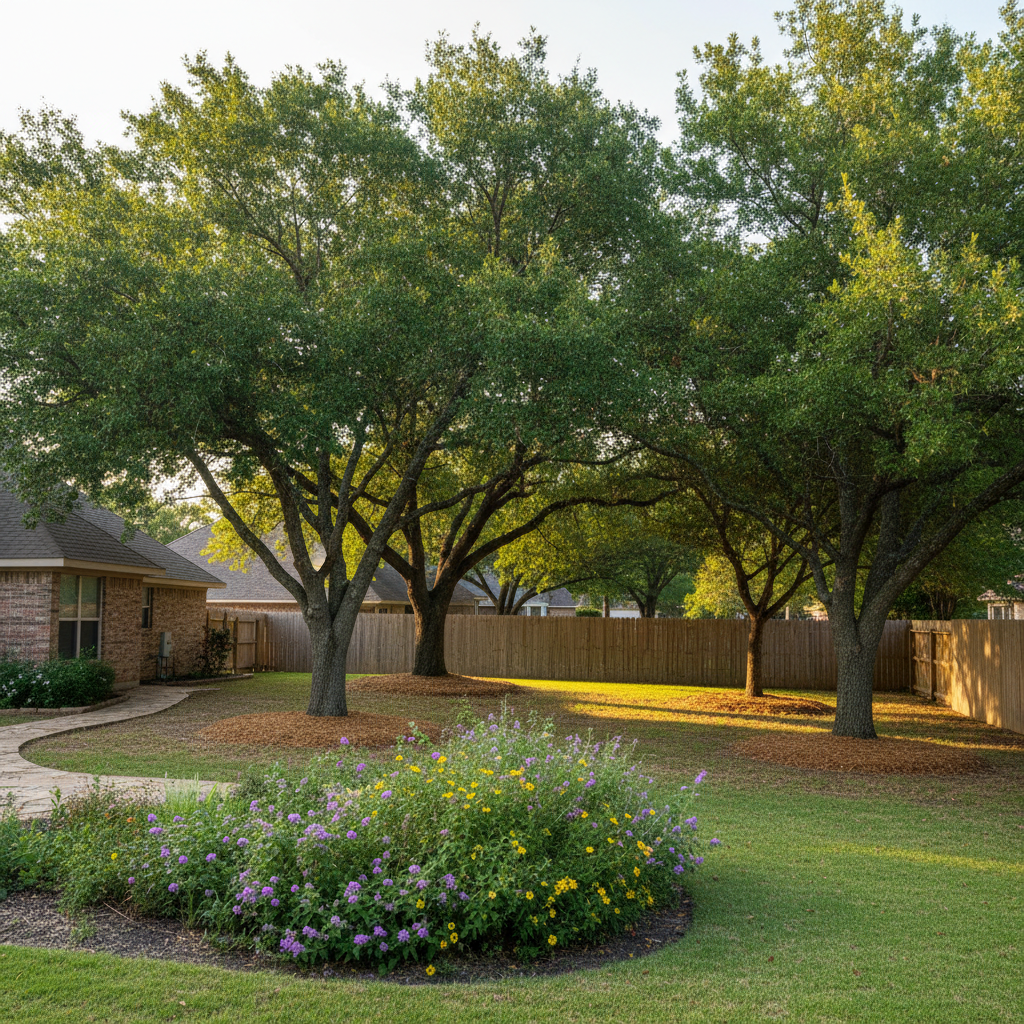
Keeping trees alive and kicking around Caldwell County takes a little more than just planting them and hoping for the best. Between our brutal Central Texas summer heat waves and those heavy, alkaline clay soils we deal with right here in Luling, local trees face a daily grind. If you want your canopy to look strong and stick around for 15 to 20 years or more, you have to put together a solid routine.
What Regular Tree Maintenance Looks Like
Routine care does not mean you need to spend every weekend outside with a chainsaw. Most of the work comes down to consistent habits. Deep watering during dry spells matters much more than a quick splash from the sprinkler every afternoon. When you water, soak the ground slowly so moisture pushes deep down where the roots actually live.
Mulching is also very important. Throwing down a wide ring of organic wood chips helps shield those roots from the baking sun and keeps the soil from cracking open when it dries out. Just make sure you keep that mulch pulled a few inches away from the actual trunk so you do not trap moisture against the bark.
Warning Signs of Tree Trouble
You can usually tell when a tree is stressed long before it starts dropping major limbs. Keep your eyes peeled for early warning signs:
- Premature leaf drop or yellowing leaves during the middle of summer
- Fungus or mushrooms sprouting up around the base of the trunk
- Unusual cracks, deep splits in the bark, or soft spongy wood
- Dead branches crisscrossing the upper canopy
Down near the San Marcos river basin and throughout local neighborhoods, trees deal with everything from root rot to stubborn borers. Catching these issues early is the only way to get ahead of them.
When to Call a Professional
There is a fine line between weekend DIY yard work and getting in over your head. If you have massive limbs hanging over your roof or power lines, drop the saw and let an expert handle it. Paradise Tree sees plenty of properties where homeowners tried to tackle structural pruning or heavy disease management on their own, only to accidentally damage the tree. If your tree is leaning hard after a heavy storm or showing widespread canopy dieback, give a pro a call to run a proper health assessment before it turns into a hazard.